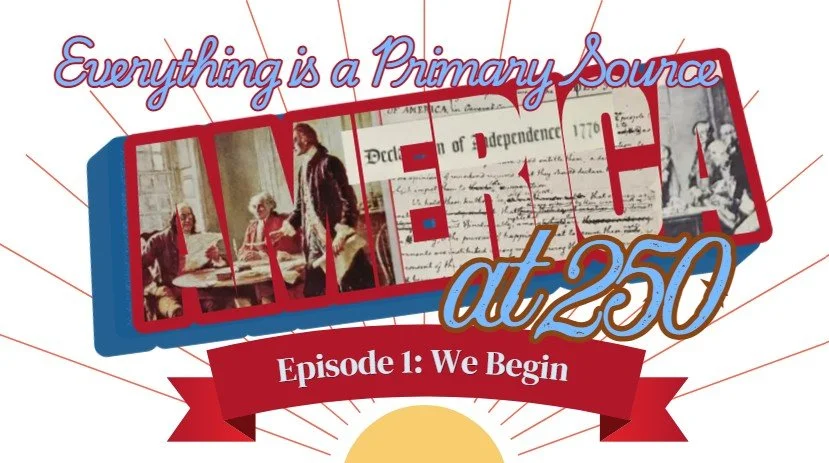
The Declaration of Independence
1776
Historical Inquiry
American Revolution, 1763 to 1800.
Essential Questions:
1)Why was the Declaration of Independence created the way it was, when it was?
2) How did the Declaration of Independence impact society in its time period, and how has it influenced the United States ever since?
Explore: Students will examine how people experienced these changes through written accounts, oral history, and physical artifacts.

Read
Rockin’ from Downtown to the Suburbs
There were several uprisings and rebellions before the American Revolution, and there have been others since. The biggest difference-maker between the colonial era resistance movements and those that came in the period following the Revolutionary War is The Declaration of Independence, and the elements that went into making it. Early uprisings, such as Bacon’s Rebellion in 1676 Virginia or the Regulator Movement that took place in rural North Carolina just before the Revolutionary War, lacked organized, agreed-upon goals of those taking to arms to stand up to colonial authorities. And while both these agitations, and other, more isolated events, such as the Mast Tree Riot in New Hampshire in 1734, had leadership and involvement from more than one demographic, they were without wide sweeping approval from the upper classes.
The Revolutionary War took shape and ultimately was successful due to coordination and cohesiveness between parts of all social classes. The Second Continental Congress, which oversaw the outbreak and first few years of the war, was comprised almost exclusively from the educated, monied elite from up and down the Atlantic seaboard. Individual stories of how they achieved that status varied—whether it was inherited or the product of their own hard work—, but names like Franklin, Adams, Wayne, Sherman, Hancock, Rutledge, Washington and Jefferson were all derived from their respective colony’s high society. It was the success of the Continental Army (which was comprised mostly of working class and “middling sort” soldiers) in ousting the British from Boston which inspired the Congress to order a document of separation from the mother country, thus putting reason and value to the one year old conflict in 1776. The core members of the Declaration of Independence committee, John Adams, Benjamin Franklin, and Thomas Jefferson, may have each had populist leanings, but they were all from the top tier of their respective colonies. But their documented philosophies of the ability of the people to change governments, as well as the natural rights of all men, provided something that previous grassroots campaigns didn’t have, and became the shared reasoning for all Americans during the war and immediately after.
Listen

Analyze
Students will locate a primary source from the 1970s , ‘80s, or ‘90s, connected to Chicago, broadcast communications, pop music, or other aspects of everyday life in the era, and use the Primary Source Analysis form to dissect it.
Reliable collections of primary sources:
Library of Congress - Locate a digital version of an artifact using loc.gov’s search filters.
Stockfilms.com - Curate and examine authentic homemade films which depict everything from major life moments to day-to-day activities.
EPS To Go! - Request to borrow a kit of genuine primary sources tailored to your specific learning goals.